Gonzalo Ríos-Vizcarra
Universidad Católica de Santa María, Arequipa. Peru
griosv@ucsm.edu.pe
The Geography of the Sacred
The Sacred Valley of the Incas (Cusco, Peru) today constitutes an exceptional laboratory for the study of contemporary architecture and religion. Since ancient times, its sacredness has been tied to an animistic worldview of the landscape and archaeological sites, configuring a Geography of High Symbolic Density. Currently, the migration for spiritual purposes—whether temporary or permanent—of transnational communities, drawn by the renowned symbolic charge of the territory, has introduced a faith characterized by mobility, hybridization, and individual experience (1, 2).
This tension between ancestral permanence and contemporary mobility is resolved through a precise architectural response: the proliferation of ephemeral and permanent structures, often inspired by global nomadic typologies, which emerge as the primary spatial form for sustaining rituals that require flexibility and constant reconfiguration.
The Central Thesis of this research posits that these primary architectural forms are not simply shelters for contemporary ritual practices; they operate as a Mutable Interface. Their function is to act as an essential device mediating between the persistent symbolic charge (3) of the Andean landscape and the need for performative production of sacred space by these communities.
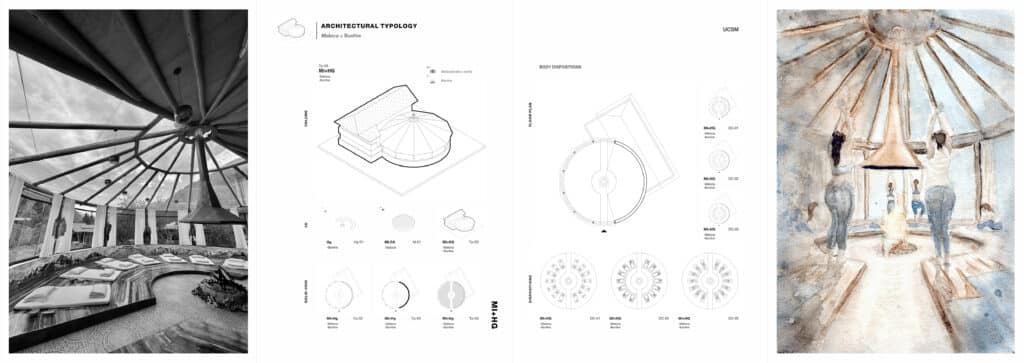
Figure 1: Ephemeral and permanent architectures in the Sacred Valley of the Incas act as a spatial device, redefining the milieu conducive to twenty-first-century hybrid spiritual practices.(Author’s own elaboration)
Hybrid Ethnography and the Sensory Body
The study adopted a qualitative and transdisciplinary approach, prioritizing the analysis of action (performativity) over the analysis of static form (4). A Hybrid Ethnography was employed to capture the fleeting and global nature of the phenomenon, combining physical fieldwork in the Sacred Valley (Pisac and surrounding communities) with Digital Ethnography (tracking and analysis of information on social networks like Facebook, Instagram, and WhatsApp groups).
This methodological design focused on Participant Observation and Phenomenological Interviews to record two crucial aspects: Corporeal Ethnography (how the body is used in the rite) and the dense description of the Atmosphere (registering the sensory control of light, sound, and temperature). This allowed the analysis of architecture not as an object, but as a processual support for experience.
Results: The Ecosystem of Mutable Architecture
The research revealed a Hybrid Ecosystem of structures organized around ritual function rather than architectural tradition.
Nomadic Typologies as a Spatialization Strategy
Seven Seminal Typologies of nomadic-global origin were cataloged (Firepit, Tipi, Yurt, Maloca, Temazcal, Tensile Tent, Geodesic Dome). These circular forms are distinguished by their formal neutrality and their role as potential containers. In practice, Complex Typological Hybridization occurs, where forms are combined to negotiate the need for permanence with the demand for flexibility across multiple rituals.
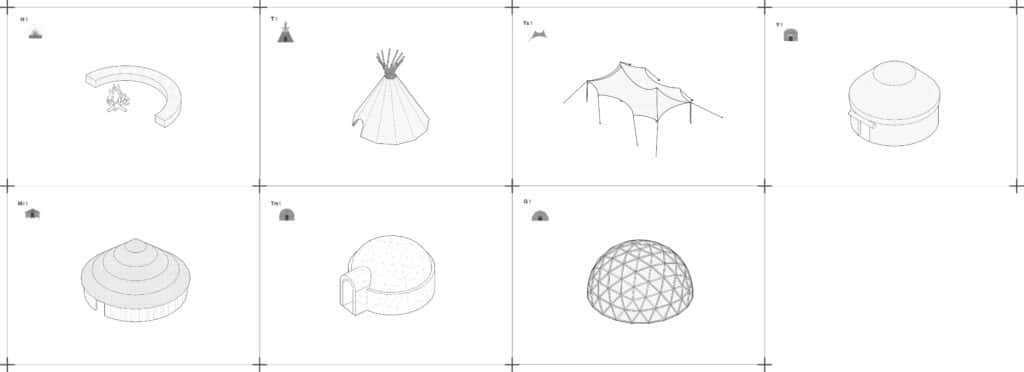
Figure 2: The firepit, tipi, tensile tent, yurt, maloca, temazcal, and geodesic dome constitute the seminal typologies of global-nomadic origin, forming the basis for typological hybridization and emergent ritual spatiality. (Author’s own elaboration)
Floating Symbology and Functional Efficacy
The neutral space of these structures is charged with meaning through a Floating Symbology that combines local iconographic elements with symbols from different parts of the world, chosen for their sensory efficiency and pragmatic capacity to sustain new spiritual narratives.
A central finding is the Semantic Vacancy Model, which explains that the versatility of these hybrid symbols in global spirituality lies in their capacity to be simplified and stripped of their historical complexity. Their value is found not in their original cosmology, but in their aesthetic function and their capacity for immediate interaction with the body and community to generate a sense of order and instant harmony (5). Symbology here operates as an efficient visual language for the construction of a temporal communal identity.
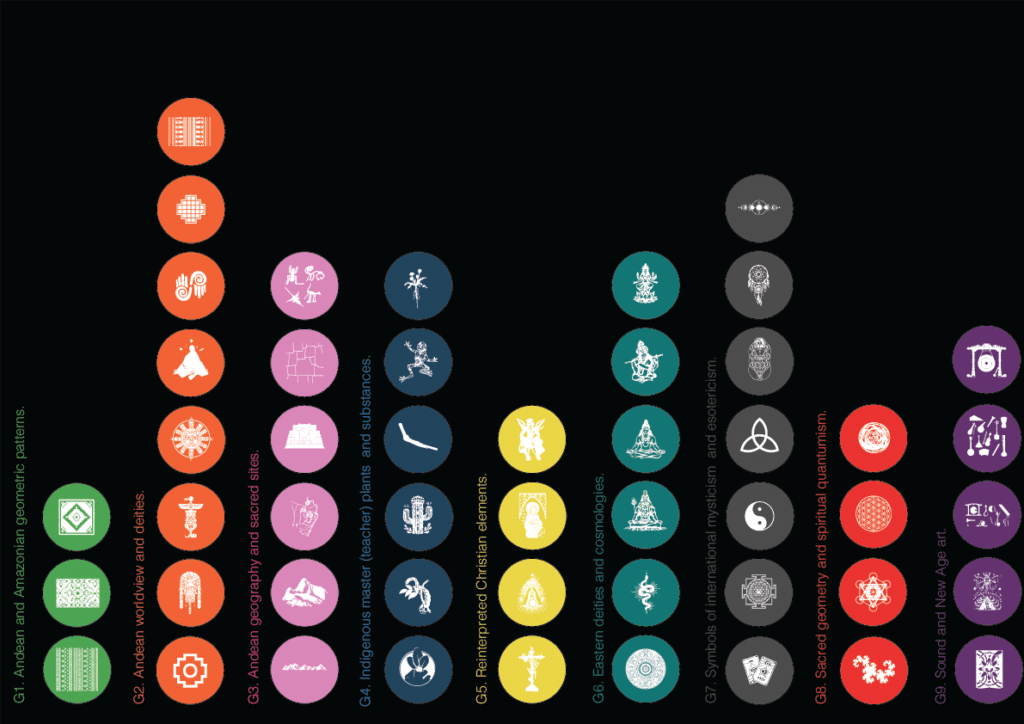
Figure 3: Elements of floating symbolism from diverse spiritual traditions converge in the Sacred Valley, composing new narratives selected for their functional efficacy and sensory impact on the community. (Author’s own elaboration)
Atmosphere and the Sensory Mechanism
The potential of the nomadic typologies resides in their capacity to generate a controlled Atmosphere (6), essential for the experience.
- Technologies of Experience: The materials and forms of the architectural structures allow for easy sensory manipulation. This includes the intentional use of natural and artificial light, chromatic spectrums, aromas, and sounds.
- Physiological Induction: Placing the body at the center of the spiritual experience, certain spaces can regulate temperatures and humidity, alongside altered states of consciousness induced by certain natural plants, all inducing a liminality where the participant becomes vulnerable and receptive to transcendent experiences.
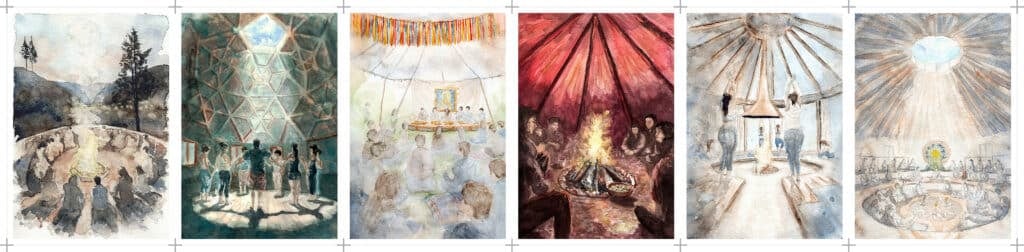
Figure 4: In a ritual regime that privileges the human body as the primary pathway to the transcendent, architecture facilitates the intentional crafting of affective atmospheres as a crucial element of the ritual scenography. (Author’s own elaboration)
Performativity and the Body as a Spatial Agent
The ritualized body is the final agent in the production of place. The architecture is not a rigid stage (7), but a porous membrane that must accommodate the diversity of Ritual Choreographies, which in many cases are associated with the consumption of local brews.
Ritual action is spontaneously organized around a Liturgical Centrality (the firepit or the altar) that acts as a spatial attractor. This dynamic creates the Floating Devotional Topology: a spatial organization that is not anchored in a fixed place, but emerges in the very practice of the ritual gesture and disappears when it concludes. The body, by acting and feeling, is what confers sacred quality to the space.
Conclusions and Contribution
The research concludes that the emergence of ritual architecture in the Sacred Valley is a phenomenon of pragmatic spatial production that is constructing new avenues of meaning toward the sacred.
- Contribution to Architecture: The Mutable Interface is proposed as an analytical category for studying spaces of worship in the era of globalization. It demonstrates that lightness, adaptability to rituals without a defined performance, and sensory efficacy are, in this context, architectural qualities superior to the monumental solidity of traditional temples.
- Contribution to Religious Studies: The study validates that the contemporary sacred place is created based on the symbolic backgrounds of sites not linked to traditional religions, where a ritual protagonism centered on corporal experience occurs, sustained by efficient narratives supported by a symbolic repertoire that is stripped of its original depth and adapts to constantly changing dynamics.
Nomadic Architecture is thus revealed not as a mere style, but as an essential device for exploring pathways to the numinous, where the gesture and the atmosphere are the true artificers of the sacred place.
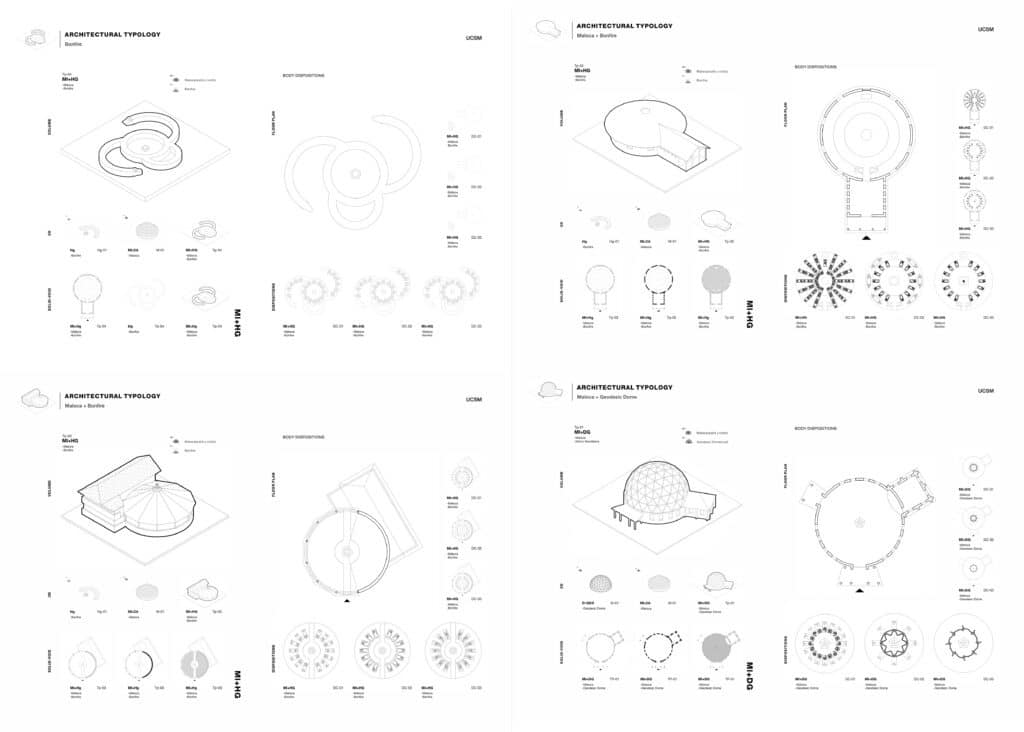
Figure 5: Typological variants resulting from the complex hybridization of seminal components adapt precisely to emergent ritual practices, demonstrating the architectural superiority of flexibility over monumental permanence. (Author’s own elaboration)
References
- Arbib, Michael, Elisabetta Canepa, Bob Condia, et al. «Atmosphere(s) for Architects: Between Phenomenology and Cognition». NPP eBooks, advance online publication, 1 de enero de 2023. https://doi.org/10.5281/zenodo.8111656.
- Bartolini, Nadia, Sara MacKian, y Steve Pile, eds. Spaces of Spirituality. Routledge, 2020.
- Bermudez, Julio, Yoshio Nakamura, Ann Sussman, et al. Semiotic and Phenomenological Study of Sacred Architecture Using Last-Generation Eye-Tracking Instrumentation in Real Conditions vs. AI-based Predictions. 2024.
- Böhme, Gernot. Atmospheric Architectures: The Aesthetics of Felt Spaces. Bloomsbury Academic, 2017.
- Otto, Rudolf. The Idea of the Holy: An Inquiry Into the Non-Rational Factor in the Idea of the Divine and Its Relation to the Rational. Traducido por John W. Harvey. CreateSpace Independent Publishing Platform, 2017.
- Owen, Bonnie. Marketing Mysticism and the Purchase of Pilgrimage: The Rise of Spiritual Tourism in Cusco and Iquitos, Peru. 1 de enero de 2006.
- Turner, Victor Witter, y Edith L. B. Turner. Image and Pilgrimage in Christian Culture. Columbia University Press, 2011.
- Zambrano, María. El hombre y lo divino. Fondo de Cultura Económica, 2016.
- Bonnie Owen, Marketing Mysticism and the Purchase of Pilgrimage: The Rise of Spiritual Tourism in Cusco and Iquitos, Peru, 1 de enero de 2006.
- Nadia Bartolini et al., eds., Spaces of Spirituality (Routledge, 2020).
- Rudolf Otto, The Idea of the Holy: An Inquiry Into the Non-Rational Factor in the Idea of the Divine and Its Relation to the Rational, trad. John W. Harvey (CreateSpace Independent Publishing Platform, 2017).
- Victor Witter Turner y Edith L. B. Turner, Image and Pilgrimage in Christian Culture (Columbia University Press, 2011).
- María Zambrano, El hombre y lo divino (Fondo de Cultura Económica, 2016).
- Gernot Böhme, Atmospheric Architectures: The Aesthetics of Felt Spaces (Bloomsbury Academic, 2017); Michael Arbib et al., «Atmosphere(s) for Architects: Between Phenomenology and Cognition», NPP eBooks, advance online publication, 1 de enero de 2023, https://doi.org/10.5281/zenodo.8111656.
- Julio Bermudez et al., Semiotic and Phenomenological Study of Sacred Architecture Using Last-Generation Eye-Tracking Instrumentation in Real Conditions vs. AI-based Predictions (2024).