Odudu Umoessien
Toronto Metropolitan University / Toronto / Canada
odudu.umoessien@torontomu.ca odudu@ikangstudio.com
Keywords: Art, Nature, Design, Meaning, Transformation, Architecture, West Africa.
Ritual as Spatial and Social Condition
How can ritualized spatial actions help strangers temporarily experience themselves as part of a collective?
Ritual has long operated as a form of social and spatial intelligence through which communities transmit values, mark transitions, and make meaning together.1 Rather than producing meaning primarily through observation, ritual does so through participation: gathering bodies, structuring relationships, organizing movement, and temporarily altering the conditions through which people encounter one another.2 Across many cultures, ritual has held life’s passages—birth, initiation, marriage, death—not simply as symbolic events, but as immersive preparations for transformation.3 This participatory discussion asks whether aspects of this ritual intelligence might inform how strangers gather and relate within contemporary public life.
Spatial Condition
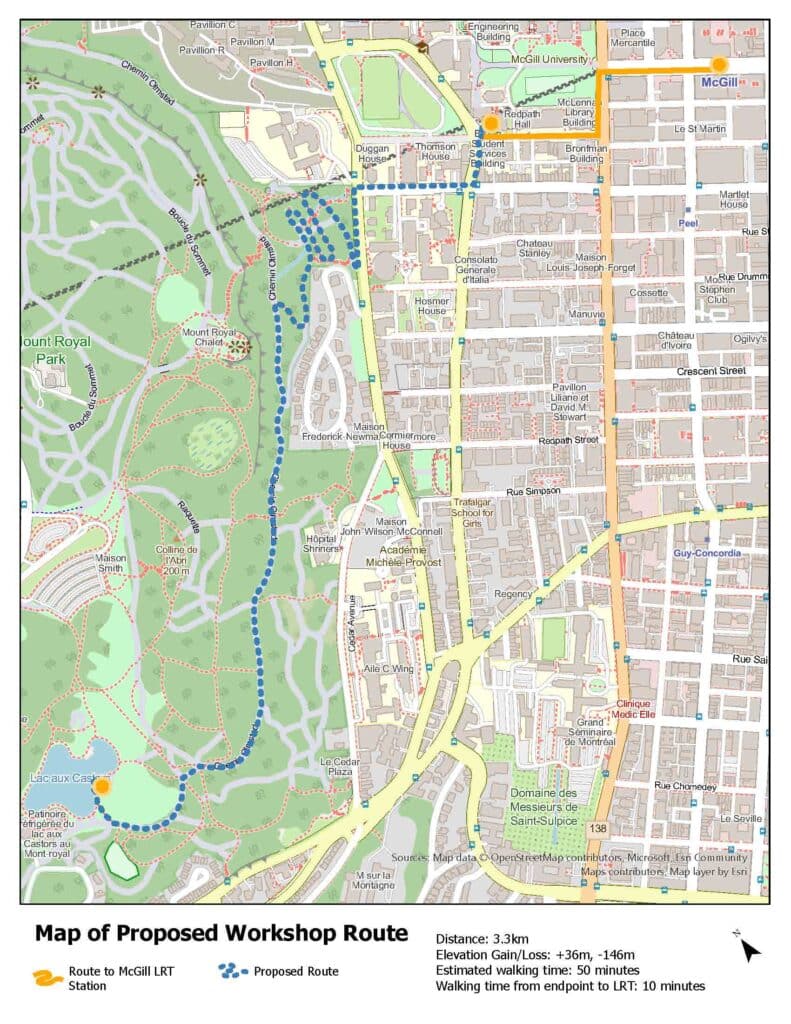
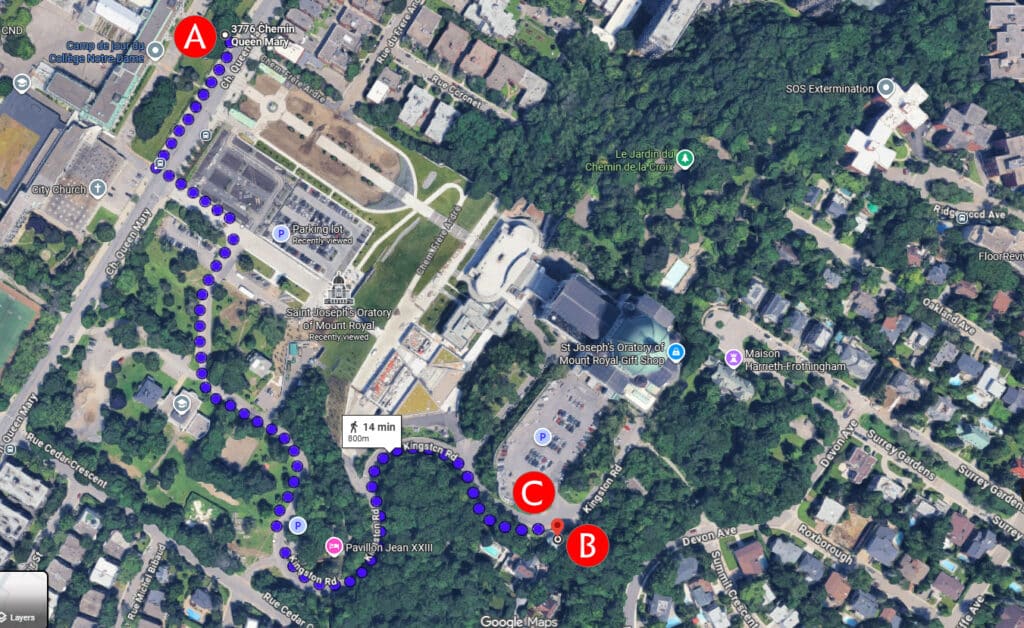
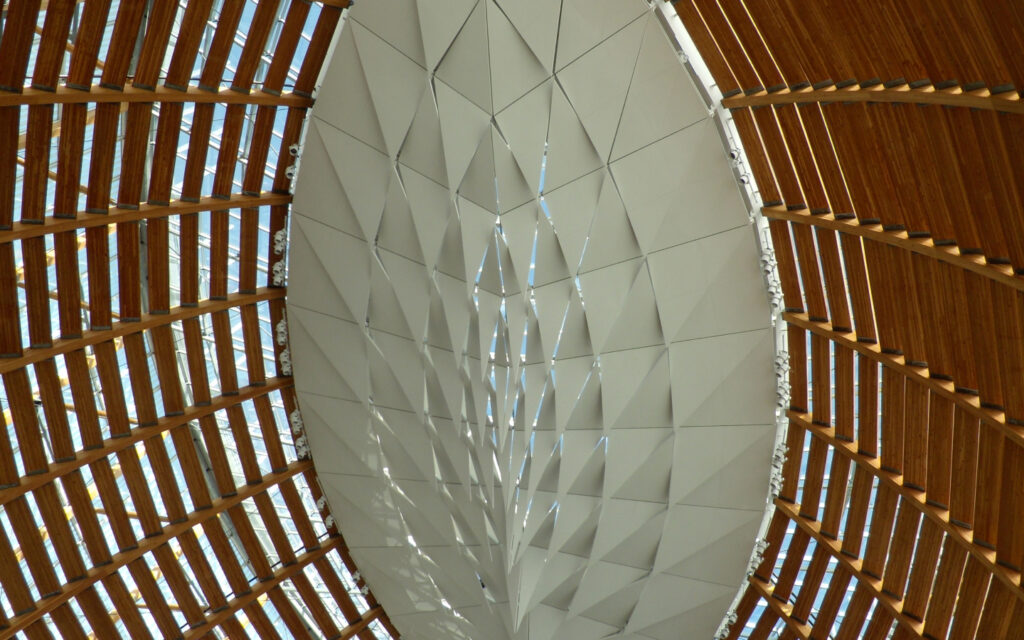
The session will take place in a quiet setting where nature remains perceptually present. Whether indoors or outdoors, the space should maintain a strong visual and atmospheric relationship to the surrounding landscape, with sky, vegetation, and natural light forming part of the spatial experience of the discussion. Participants will be seated in a horseshoe arrangement oriented toward a single empty chair positioned at its open end. The chair establishes a shared spatial focus, remaining initially unassigned a fixed symbolic meaning.
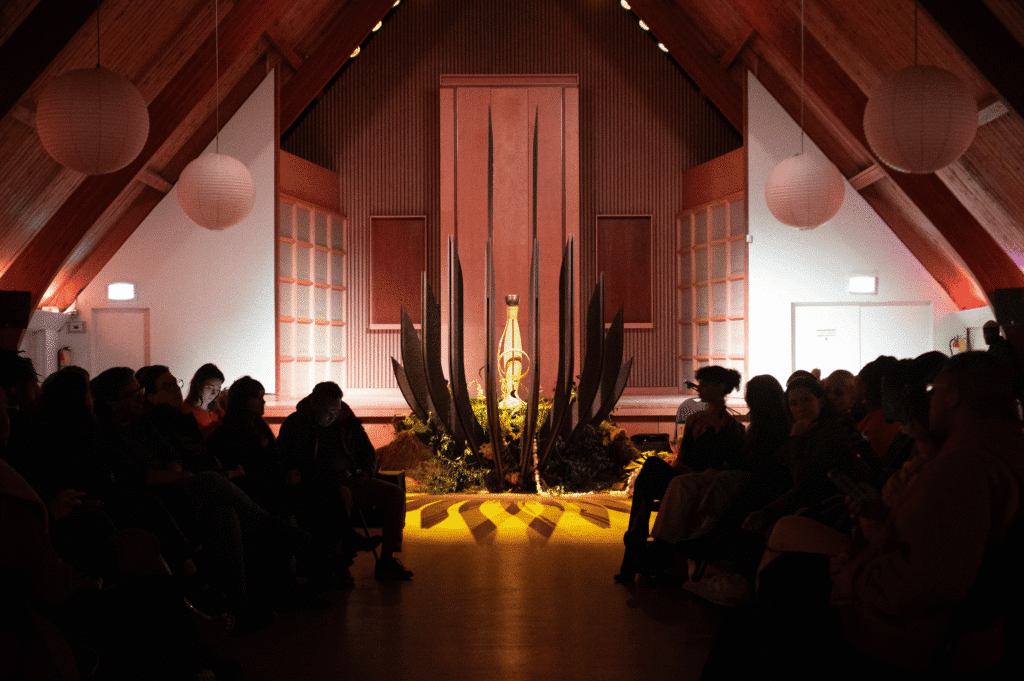
Participants will then be introduced to Ark: In Search of Surrender, a site-specific ritual installation-performance realized in 2024. Informed by West African understandings of ritual, the project explored how space, art, nature, collective action, and witnessing might contribute to a temporary experience of communal belonging among approximately 200 people within a contemporary multicultural context like Toronto. Rather than re-presenting the installation, Ark will serve as a case study through which a broader discussion about ritual as a means of organizing relationships between bodies, objects, environments, and collective life will unfold. Drawing particularly from West African ritual traditions, the discussion considers these practices as sophisticated systems through which space, participation, repetition, transition, and witnessing can structure collective experience.4 It asks what such forms of knowledge might offer contemporary approaches to public space and participatory design when translated into urban contexts with care. The majority of the session will take the form of a group conversation centred on one question: What can creative spatial experiments reveal about how strangers make meaning and experience collectivity together?
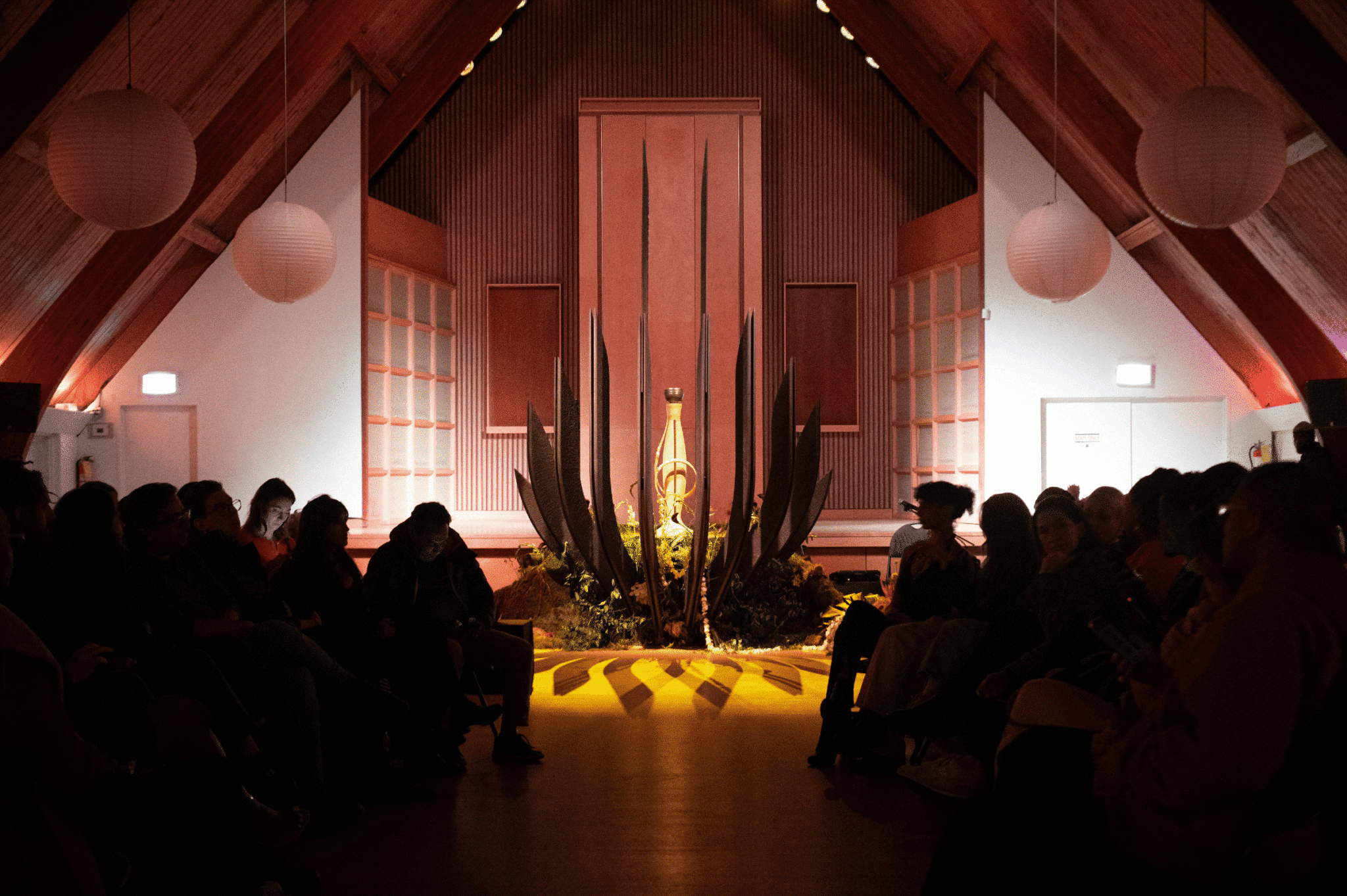
Figure 1: Ark: In Search of Surrender, Toronto 2024. Project by Ikang studio. Photograph by Fifo Adebakin.
Collective Action
During a focused period of the discussion, participants may choose to leave their place within the seated group, cross the shared space, occupy the empty chair to offer a reflection, and then return to the group. Other participants may subsequently repeat the action. Through this simple recurring sequence, separation, transition, temporary occupation, witnessing, and return become collectively experienced dimensions of the conversation rather than subjects discussed only in abstraction. The empty chair therefore functions as a spatial instrument whose meaning develops through repeated use. Each occupation temporarily distinguishes one person from the collective while simultaneously making their relationship to the group more visible. Their return restores the chair to vacancy and reintegrates the participant into the collective. As the sequence repeats, the discussion acquires a spatial rhythm through which individual speech and collective witnessing become physically intertwined.
Reflection
The session concludes with the chair once again empty. The group will then be invited to reflect on the condition created through the gathering through one final question: What, if anything, feels different about this group now than when we first gathered? The discussion therefore begins and ends with the same spatial condition, while asking whether the relationships surrounding that condition have changed through repeated acts of gathering, separation, witnessing, and return. This approach engages the Salon’s theme by examining the relationship between people, space, experience, and meaning. It asks how architecture and public space might accommodate less tangible dimensions of urban life: memory, communal recognition, and the desire to experience oneself as part of something larger. Rather than treating the sacred as a fixed quality of a place or object, the session considers whether it might emerge as an experiential condition produced when people gather, move, witness, and act together within a deliberately prepared environment.
Notes
1. Catherine Bell, Ritual Theory, Ritual Practice (Oxford University Press, 1992), 69–117; Arnold van Gennep, The Rites of Passage, trans. Monika B. Vizedom and Gabrielle L. Caffee (University of Chicago Press, 1960), 1–14
2. Bell, Ritual Theory, Ritual Practice, 69–117; Randall Collins, Interaction Ritual Chains (Princeton University Press, 2004), 47–81.
3. van Gennep, The Rites of Passage, 1–14; Victor Turner, The Ritual Process: Structure and Anti-Structure (Aldine Publishing Company, 1969), 94–130.
4. Jacob K. Olupona, City of 201 Gods: Ilé-Ifè in Time, Space, and the Imagination (University of California Press, 2011), 86–173.