Roberto Chiotti
Toronto, Canada
rchiotti@gmail.com
Keywords: design, aesthetics: experience, meaning, phenomenology, ritual, architecture
Discussion Circle Question
How does bodily presence, sensory mediation, and ritual participation shape or alter the experience of transcendence within sacred space?
One of the planned activities during the Montreal Salon is to attend the AURA (immersive sound and light experience) at Notre Dame Cathedral. As a follow up to that experience, my proposal is to facilitate a discussion that explores the relationship between sacred space and the activity that unfolds within it. I would begin by first asking whether the AURA experience had either enhanced or detracted from the sense of transcendence that one expects to experience in a sacred space of such importance. Immediately before entering the Cathedral, I would ask attendees to consider, reflect upon, integrate, and later be able to articulate how bodily presence1, sensory mediation, and ritual participation had shaped or altered their experience of transcendence?
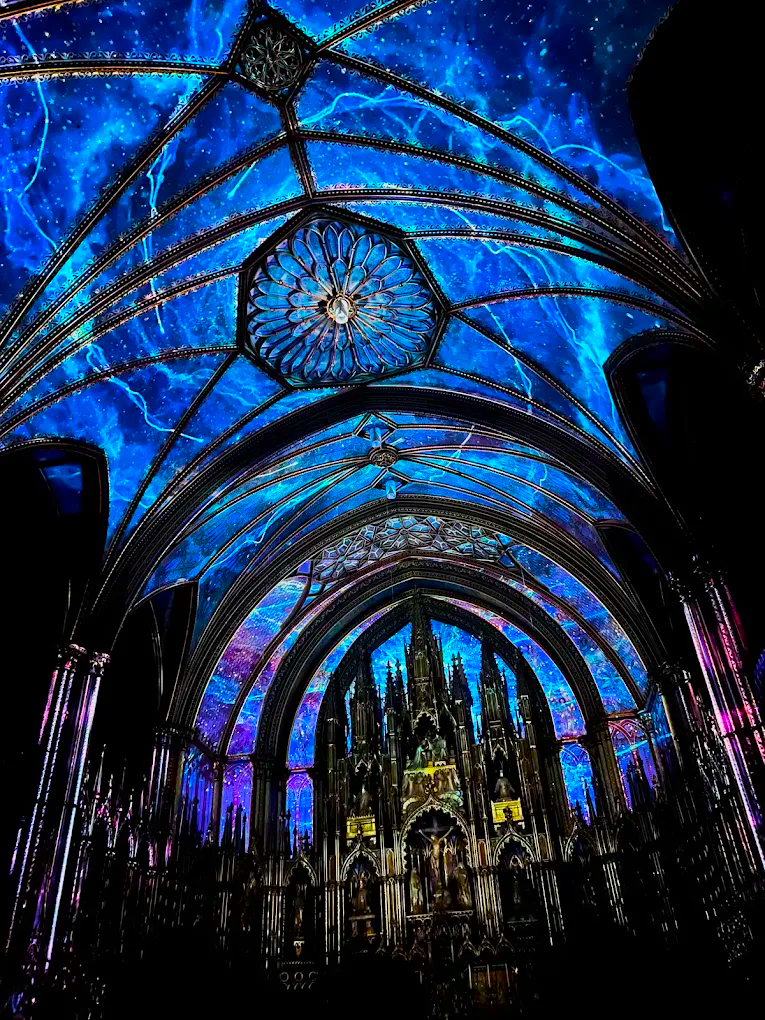
Figure 1: Interior view of Notre Dame Cathedral during the Aura Experience.
Similarly, many other famous churches, temples, synagogues, or mosques around the world offer access to tourists during times when the worshiping community is not engaged in prayer services or other liturgical rituals. How does the tourist experience differ from that of the worshipping community of believers? Does reciprocity exist between the spatial container and the ritual action that unfolds within it? Does each inextricably inform the “design” of the other? Must one be a believer of that faith tradition to fully understand/appreciate how the design/decoration of sacred space is meant to curate an experience of transcendence while either visiting the sacred space as a tourist or while attending a ritual service?
Furthermore, do those with cultivated perception and/or disciplinary sensitivity have an advantage over others when experiencing sacred space regardless of the situation that brings them there? These and other corollary questions that might emerge would draw on the richly diverse lived experience of salon participants and hopefully enhance our collective salon theme’s discourse.
Ideally, the perfect context for the discussion would be the Red Roof Church sanctuary space on the morning after attending the Aura experience and before we engage in the regularly scheduled proceedings for that day. Having had an opportunity to reflect upon the experience in addition to participating in meditation and listening to sacred music or poetry during the morning sessions, this firsthand, shared experience would hopefully add a sense of immediacy, presence, and depth to the conversation.
References
Pallasmaa, Juhani. The Eyes of the Skin: Architecture and the Senses. Chichester, West Sussex, UK: John Wiley & Sons, 2012.
Notes
1. Pallasmaa, Juhani. The Eyes of the Skin: Architecture and the Senses. Chichester, West Sussex, UK: John Wiley & Sons, 2012. P. 43