Rachael Grochowski
RHG Architecture + Design
Montclair, NJ + Denver, CO, USA
rachael@rhgdesign.com
Nooshin Esmaeili
School of Architecture, Planning & Landscape, University of Calgary, Canada
Nooshin.esmaeili@ucalgary.ca
Keywords: design; sacred space; spirituality, architecture + interior design; mindfulness + well-being; biophilic
Introduction
Our experience of space is inherently embodied, yet the Western mind often takes us out of the body and into the intellect. Understanding and becoming more aware of what we feel in our bodies can change the way we approach architecture and design. When we begin to design from what we feel in our bodies, we create spaces that support not only our connection to space, but also to time, each other, and ourselves.
From Body to Place: Reawakening Embodied Perception in Design is a 45-minute experiential workshop that invites participants to explore this relationship between body and place. Rather than approaching embodied perception as an intellectual concept, the workshop asks participants to experience it, to notice how memory, material, movement, spatial relationships, and sensory conditions affect how they feel.
The workshop begins from the premise that meaningful design does not originate in the mind alone. Our bodies are continuously receiving and responding to information about the spaces around us, often before we consciously recognize it. By becoming more present to these responses, designers can begin to access another way of understanding space and consider how this awareness might influence the environments they create.
Beginning with Presence
The workshop opens with an introduction by Rachael Grochowski and Nooshin Esmaeili and a brief discussion of why embodied experience matters to architecture and design. A Design is Spiritual™ Reflection Card will be placed on each participant’s chair. The workshop begins with a card that reads: “A spiritual space is one that invites you into the present moment, that creates an opportunity for connection, reflection, and awareness.” The card provides a frame for the experience that follows: an invitation to become present and to notice rather than immediately analyze.
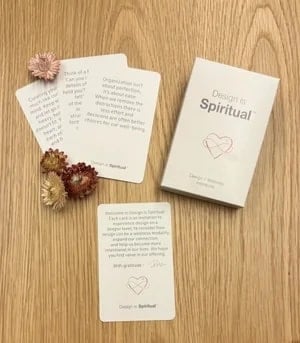
Figure 1: Design is Spiritual™, Design + Wellness Reflection Cards, created by Rachael H. Grochowski
The Spaces That Live Within Us
Participants will then be invited to recall a meaningful memory. Rather than focusing on the event itself, they will be asked to shift their attention to the place in which the memory occurred and to the sensations that remain. What details stand out? Perhaps it is a color, scent, texture, quality of light, spatial flow, or a particular three-dimensional quality. How did it feel to be there? What does the body remember about that space?
Rachael and Nooshin will briefly share personal examples to help illustrate how deeply our memories can be connected to the physical and sensory qualities of place. The exercise asks participants to consider that our experience of architecture may live within us in ways that extend beyond what we consciously see or intellectually understand.
An Invitation to Experience
The workshop then shifts from remembering space to experiencing it in the present moment. Participants will move through a sequence of intentionally created sensory and spatial conditions and simply notice their responses.
Material may be explored through the contrast between real wood and simulated wood. Participants will be invited to touch and experience each, noticing qualities such as temperature, texture, familiarity, comfort, and their own physical or emotional response.
Flow and three-dimensional space will be explored through compressed and more open arrangements. Chairs or objects may be used to create different widths, boundaries, and spatial relationships. Participants may pause within these conditions, raise their arms, reach upward, or move left and right, becoming more conscious of their bodies in relationship to the space around them. Other sensory conditions may include light, sound, or scent. Contrasting lighting conditions, for example, can allow participants to notice the effects of brightness, shadow, warmth, direction, and contrast.
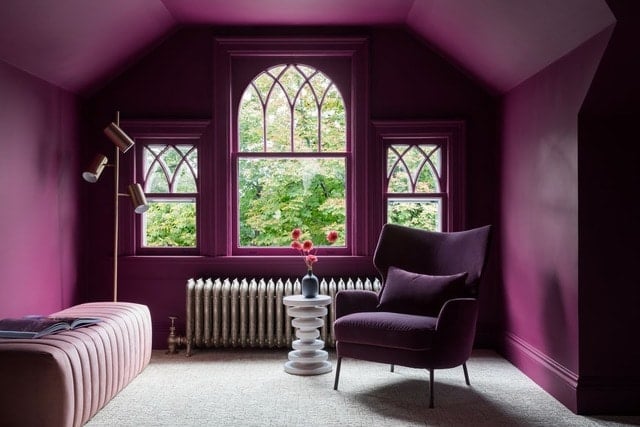
Figure 2: Guest Bedroom designed by RHG Architecture + Design
These experiences are not intended to prescribe a “right” response. Instead, they create opportunities to pay attention: What do I feel? Where do I feel it? What changes as the space around me changes?
From Awareness to Design
The workshop closes by returning to the Design is Spiritual™ Reflection Cards and considering how this practice of noticing can extend into the design process. The cards are offered as prompts for greater presence, reflection, and intentionality, encouraging participants to remain connected to what they experience and feel as they make decisions. Through embodied awareness, we can begin to consider architecture not only in terms of what a space looks like or how it functions, but also how it is experienced and what it makes possible. This awareness can help us design more intentionally for connection, belonging, inclusion, and well-being.
Participants will be invited to carry the practice with them beyond the workshop and into the remainder of the ACSF Salon and the city of Montréal. As they move through different environments, they might notice when their bodies relax or become alert, where they naturally pause or linger, when they feel connected to a place or to other people, and how material, scale, light, sound, or movement contributes to those responses.
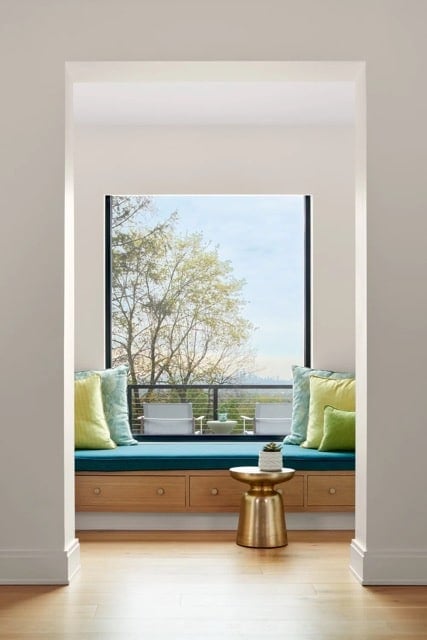
Figure 3: Nook with a view, designed by RHG Architecture + Design
By bringing awareness back into the body, the workshop invites participants to reconsider where design begins. When we allow embodied experience to inform the design process, we can create spaces that deepen our connection to space, time, each other, and ourselves.
References
Esmaeili, Nooshin, and Brian R. Sinclair. “Architecture, Wellbeing + Happiness: From Enriched Classrooms to Nourished Souls.” In Proceedings of the 4th Valencia International Biennial of Research in Architecture: Wellbeing for All, 710–26. Valencia: Editorial Universitat Politècnica de València.
Mallgrave, Harry Francis. The Architect’s Brain: Neuroscience, Creativity, and Architecture. Chichester: Wiley-Blackwell, 2010.
Mallgrave, Harry Francis. From Object to Experience: The New Culture of Architectural Design. London: Bloomsbury Academic, 2018.
Pallasmaa, Juhani. The Eyes of the Skin: Architecture and the Senses. Chichester: Wiley, 2005.
Robinson, Sarah, and Juhani Pallasmaa, eds. Mind in Architecture: Neuroscience, Embodiment, and the Future of Design. Cambridge, MA: MIT Press, 2015.
Sinclair, Brian R. “Salutogenesis, Design + Health: Embracing Holistic Tactics to Fostering Wellbeing in Built Environments.” In Proceedings of the 4th Valencia International Biennial of Research in Architecture: Wellbeing for All, 1016–26. Valencia: Editorial Universitat Politècnica de València, 2026.
Sinclair, Brian R., and Nooshin Esmaeili, eds. Health, Happiness, Design, and the City: Explorations of Critical Forces & Factors Beyond the Pragmatic. Calgary, Canada: Calgary Quality in Canada Built Environment, 2026.
Zumthor, Peter. Atmospheres: Architectural Environments—Surrounding Objects. Basel: Birkhäuser, 2006.