Michelle Gagnon-Creeley and Narita Reyes Ico
University of British Columbia, Vancouver, Canada
michelle.creeley@gmail.com, narita_ico@yahoo.ca
Keywords:
Practice
Ethics: justice, equity, and inclusion
Discipline: landscape architecture, urbanism/city
Empathy, compassion, love, well-being
Main Question
How can designers and planners learn with communities to better support informal practices of care, stewardship, and belonging through more responsive approaches to public space design?
Description
CRAB Park (Create a Real Available Beach) is a community-created waterfront park in Vancouver’s Downtown Eastside that emerged from grassroots activism in the 1980s. Over time, the park has served as a gathering place, a site of mutual care, cultural expression, and a home for unhoused community members, highlighting the role of public space as places of refuge and belonging.
In times of heightened inequality driven by affordability, the housing crisis, and climate-related disasters, disproportionately affected communities are increasingly turning to public spaces for relief. Yet policies and design often restrict these acts of survival. Despite this, communities continue to gather, care for one another, and steward their environments. Through repeated acts of care, refuge, memory, responsibility, and collective presence, ordinary spaces acquire deep community and cultural significance. While these stories often remain unrecognized, they continue to shape public spaces around shared community needs and a collective desire to belong. This is not an isolated case in Vancouver, but rather a phenomenon found in cities across the country.
In this discussion circle, participants will define their relationships to public space, examine how planning and design have historically shaped their cities, and reflect on overlooked forms of collective action within their neighbourhoods that challenge conventional, systemic landscape planning and design practices. By sharing lived experiences from across Canada, participants will explore what it means to be in community while identifying common experiences that can help planners and designers better recognize and support informal, unsanctioned, and resistant acts of care in public space.
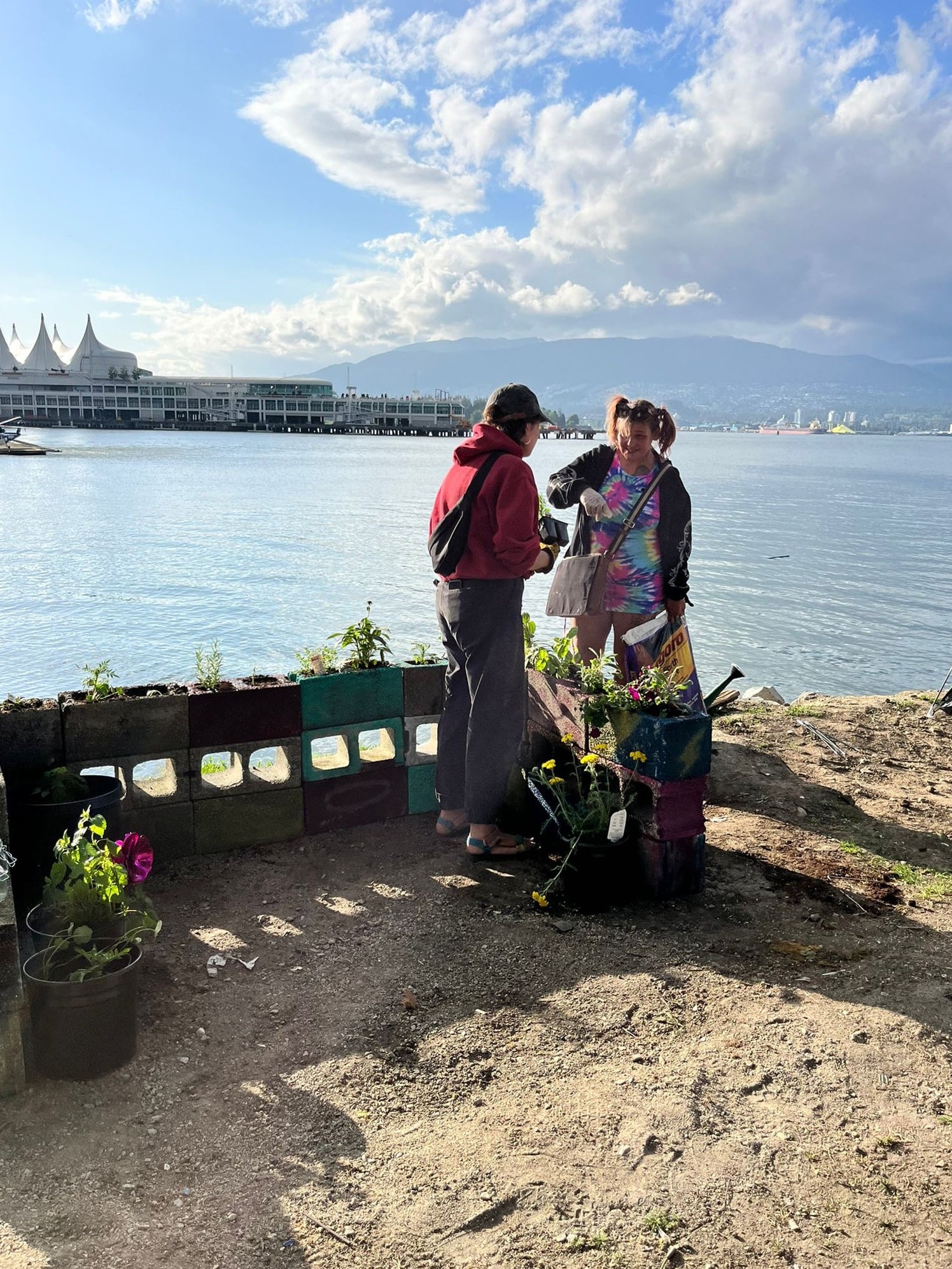
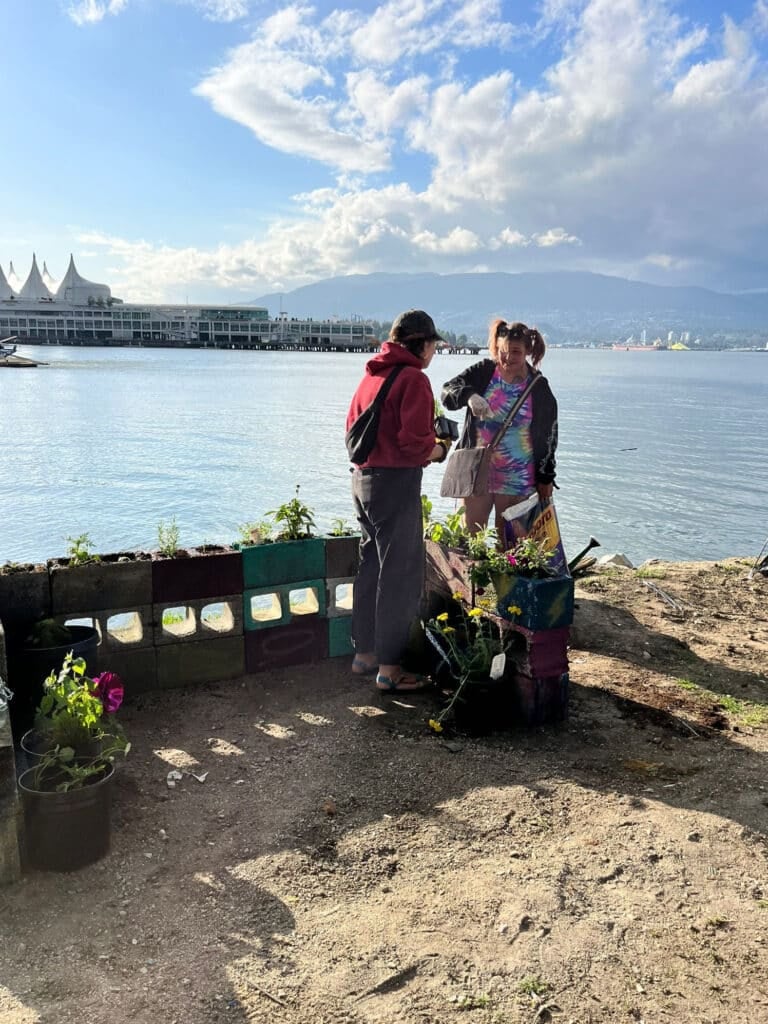
Figure 1: Ay’x community garden, designed and built by residents and volunteers of CRAB Park Tent City, May 2023. (Michelle Gagnon-Creeley)