Mani Ardalan Farhadi
Stanford University, Palo Alto, California, United States
mfarhadi@stanford.edu
Nooshin Esmaeili
University of Calgary, Alberta, Canada
Nooshin.esmaeili@ucalgary.ca
Keywords: Spirituality, sacred space, meaning, contemplation, poetics, mysticism
“This outward spring and garden are a reflection of the inward garden.”
~ Jalal ud-Din Rumi~
Where the Visible Opens into the Invisible
How might a visible city reveal its less visible dimensions? How does architecture shape not only what we see and touch, but also how we remember, move, belong, and search for meaning? The Hidden and the Manifest is a participatory discussion circle that explores these questions through poetry, mindful observation, embodied movement, and collective dialogue.
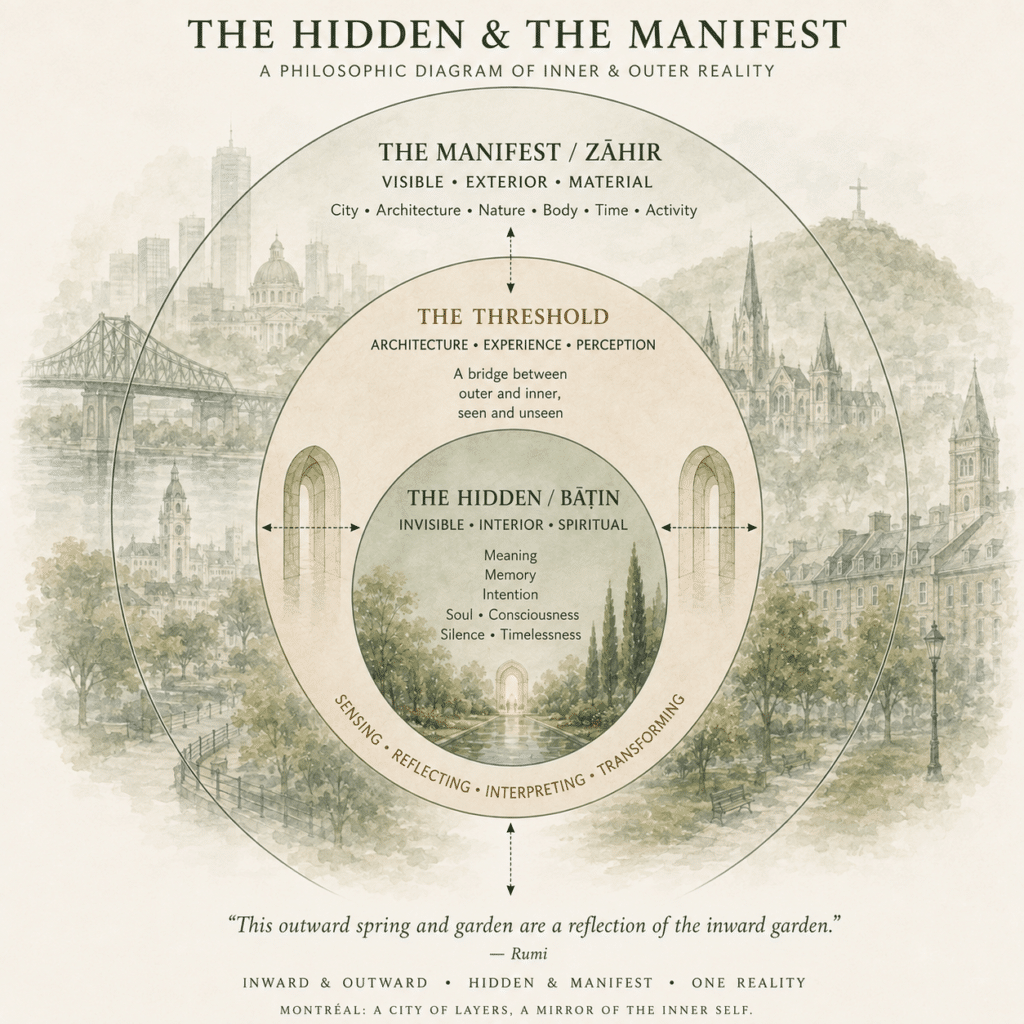
The session takes inspiration from the Sufi concepts of the Hidden and the Manifest. These concepts are introduced not as a fixed opposition between two separate worlds, but as complementary ways of encountering reality. The Manifest, tangible, refers to what becomes perceptible through material form: surfaces, light, sound, temperature, scale, thresholds, movement, and spatial organization. Hidden or intangible refers to meanings and relationships that cannot be understood through appearance alone, including memory, longing, belonging, exclusion, spiritual association, and the different histories carried by a place.
Rumi’s poetic image of the outward garden reflecting an inward garden provides an opening provocation. The poetry of Farid al-Din Attar similarly presents perception and self-knowledge as journeys rather than final destinations. In this discussion circle, poetry does not explain architecture or provide a predetermined spiritual interpretation. Instead, it slows attention, opens imaginative possibilities, and enables several meanings to coexist.
Montréal offers a particularly resonant setting for this inquiry. Its métro stations and underground pedestrian network, public squares, historic buildings, seasonal transformations, and relationship to the mountain continually bring interior and exterior, movement and refuge, visibility and concealment into contact. These conditions challenge the assumption that contemplation belongs only to quiet gardens, places of worship, or spaces removed from everyday activity. Can a crowded métro platform, commercial passage, or busy public square also support a contemplative experience? Can repetition, footsteps, artificial light, reflected surfaces, or the interval between trains heighten awareness rather than prevent it?
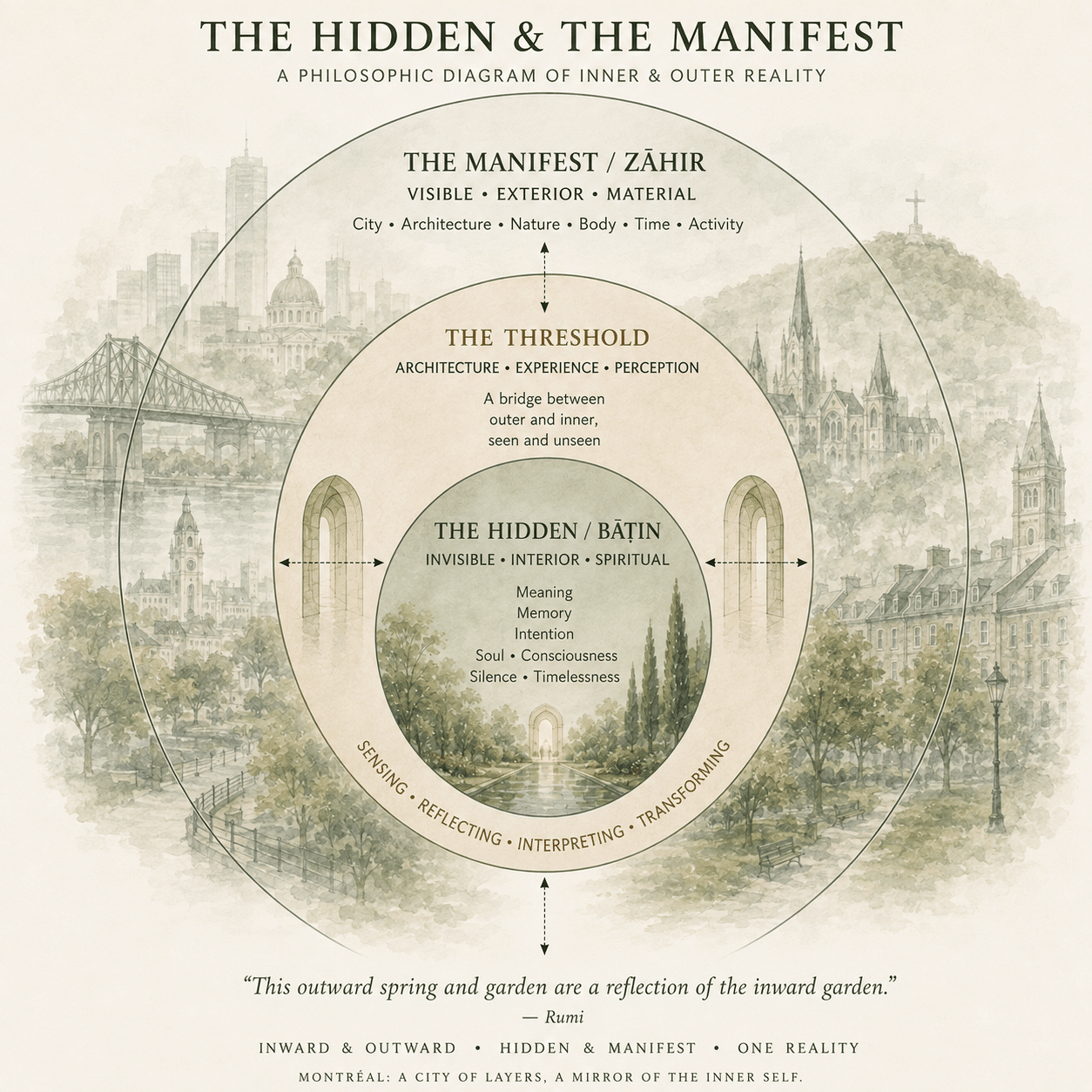
Figure 1: The Hidden and The Manifest by Mani Farhadi
Showing a philosophic diagram of inner and outer reality
“We have a way from this visible world to the Unseen.”
~ William Chittick ~
Learning to See with the Inner Eye
The first objective of the session is to cultivate a more attentive and embodied way of seeing architecture. Architectural experience is frequently discussed through images, plans, styles, and formal categories. This circle begins instead with the sensing body. Participants consider when their pace changes, where they feel oriented or disoriented, what draws their attention, and how light, sound, material, weather, enclosure, or proximity to others shapes their experience.
The second objective is to question the idea that Montréal possesses one hidden or invisible city waiting to be uncovered. There may be as many invisible cities as there are experiences of Montréal. A passage that provides seasonal refuge and comfort to one person may communicate confusion, surveillance, or exclusion to another. A public square may hold collective memory for one community while representing displacement or erasure for another. The circle therefore invites participants to speak from their own situated experiences while recognizing that no individual interpretation can represent the city as a whole.
A third objective is to examine how architecture might invite reflection without prescribing what people must feel. The session does not attempt to identify a universal formula for contemplative or sacred space. Instead, it asks what architectural conditions may support attention, pause, encounter, wonder, or inward reflection—and how those same conditions may operate differently for different bodies and communities.
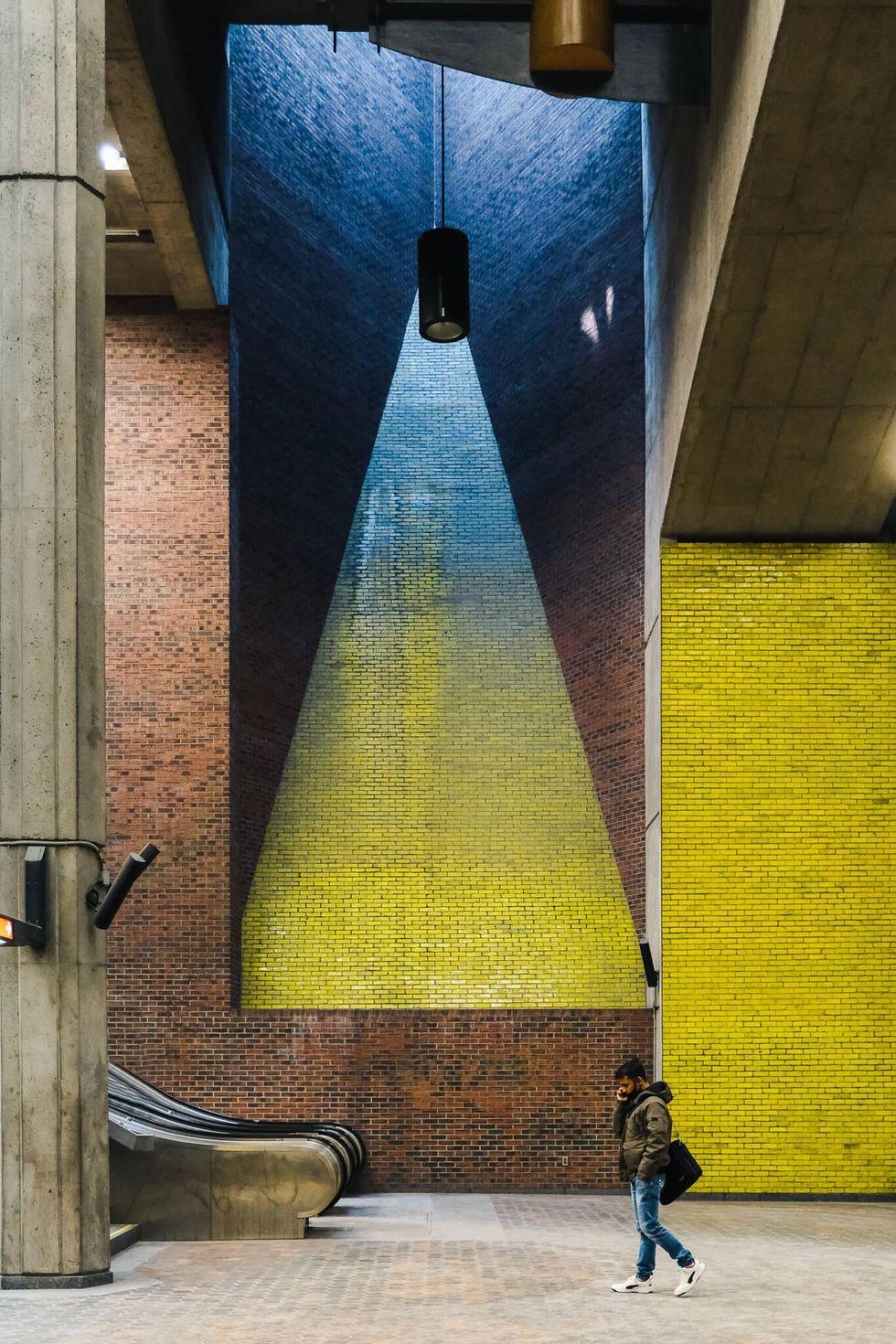
Figure 2: Montreal Metro Stations by Lauriane Michaud @l_michoo
A passage through Montréal’s underground city: movement, refuge, visibility, and concealment
From Footstep to Words: Walking the Threshold
The session begins with a short, fully credited passage from Rumi, followed by a concise introduction to the Hidden and the Manifest. Participants carry two questions into the activity: What does this place make perceptible? What remains hidden, and to whom?
A brief mindful walk then translates this poetic inquiry into an embodied practice. Participants move through the conference building or its immediate surroundings while attending to one threshold, one source of light, one sound, one material surface, and one moment when their posture, pace, or attention changes. The walk is not an architectural tour and requires no prior knowledge of Montréal. Its purpose is to interrupt habitual movement long enough for ordinary spatial conditions to become newly perceptible. The activity recognizes that there is no single way to move through or sense the city. Participants may walk independently, accompany another person, remain seated and observe their immediate surroundings, or work from a prepared photograph. Silence is offered as an invitation rather than imposed. These alternatives avoid assuming that participants share the same mobility, sensory capacities, comfort, or relationship to public space. Each person returns with three observations: something physically present, something felt through the body, and something the place brought to mind.
The mindful walk becomes the common ground for the discussion circle. The conversation begins with description rather than interpretation: Where did your pace, posture, breathing, or attention change? What physical or sensory feature contributed to that change? Was there something that resonated with you and your enjoyed feeling or what you looked at? Something that made you uncomfortable? It then expands toward Montréal’s métro, underground city, public squares, gardens, historic fabric, and other remembered places. When the discussion becomes overly abstract, the facilitators return it to architecture and embodiment: What physical feature led to that interpretation? Where was the body in the experience? Could another person encounter the same feature differently? These questions keep poetry connected to built form while resisting the claim that architecture automatically produces a particular spiritual response.
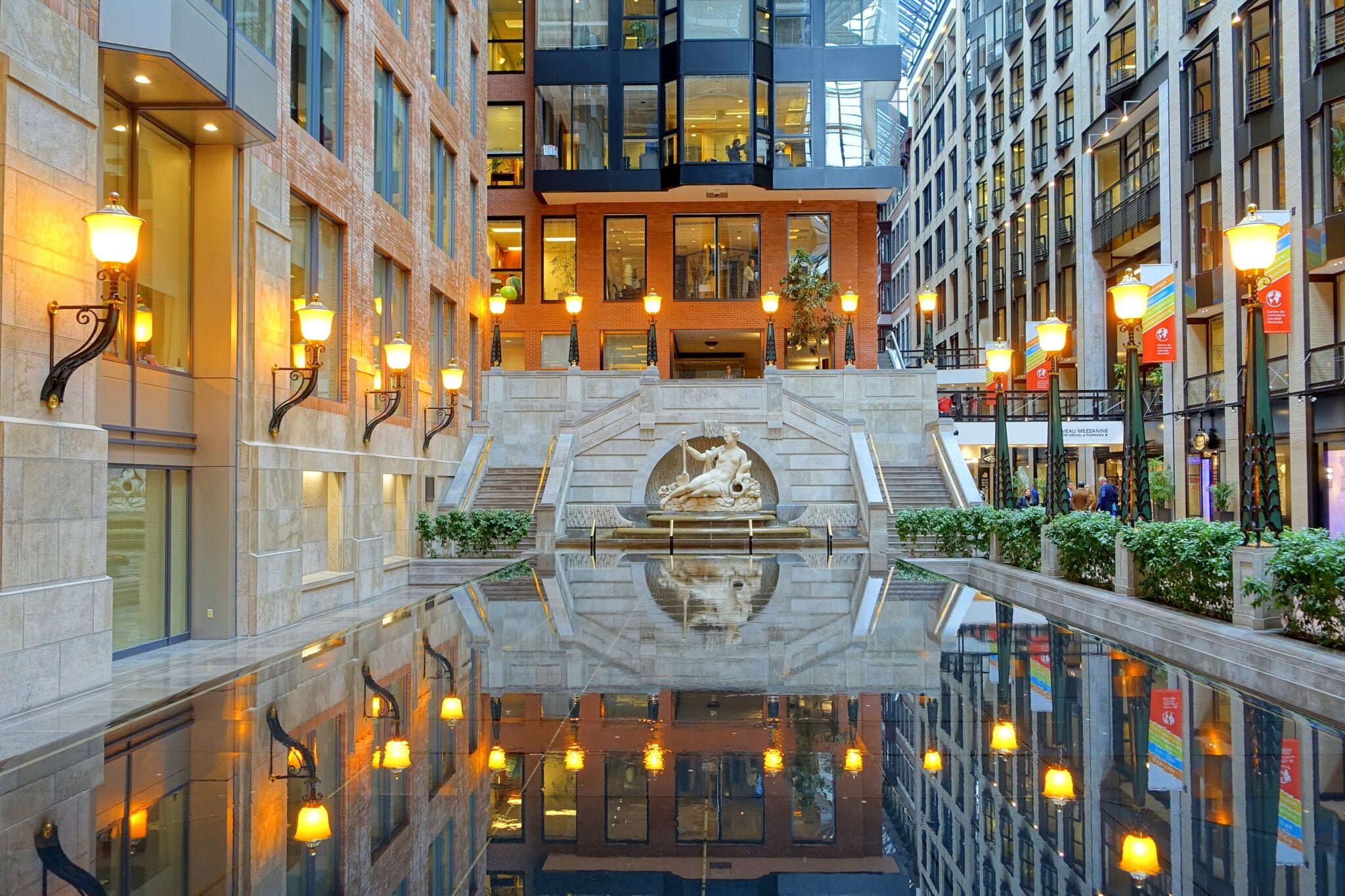
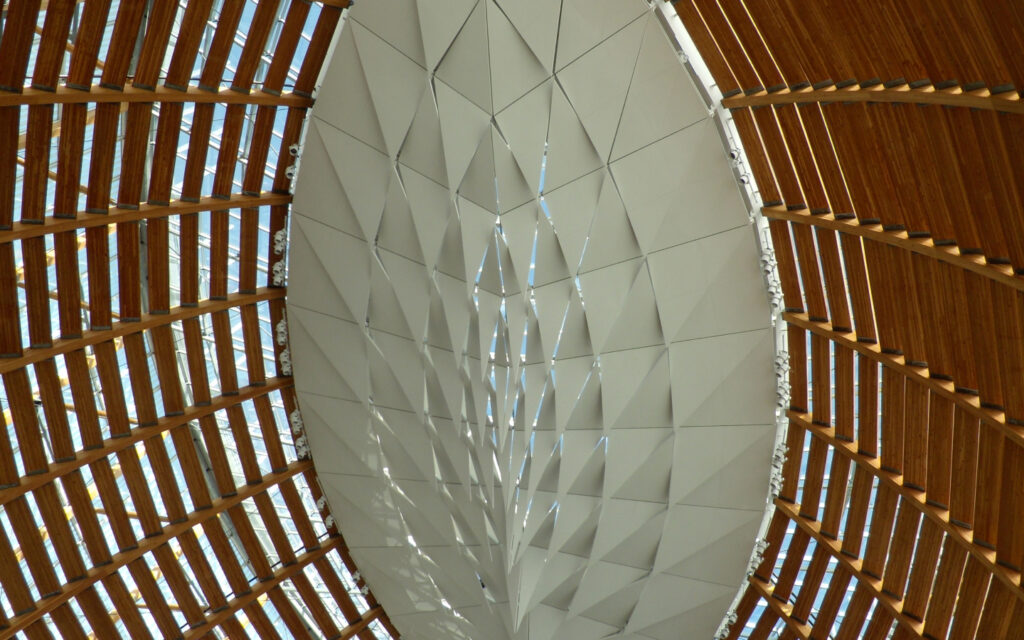
Figure 3: World Trade Centre Montréal interior by Daderot, Creative Commons CC)
Shows reflection, interior/exterior ambiguity, historic & contemporary architecture, and the underground city
“Are you within or without? Are you hidden or manifest?”
~ Farid ud-Din Attar~
The Journey Continues
The circle develops a provisional shared vocabulary organized around three permeable categories: Manifest, Threshold, and Hidden. The Manifest may include light, material, sound, scale, weather, and circulation. Threshold may include pause, contrast, repetition, encounter, orientation, and refuge. The Hidden may include memory, belonging, exclusion, longing, and sacred association. A material surface may hold a memory; a threshold may be physical, social, or inward; what remains hidden to one person may be immediately manifest to another. The intended outcome is not consensus or a single definition of sacred architecture. It is a richer understanding of architectural experience as a relationship among form, body, memory, culture, and other people. Participants leave with a vocabulary for discussing this relationship and a simple practice they can carry into the city: pause at an ordinary threshold and ask what it manifests, what it conceals, whose experience it supports, and what it awakens.
This approach connects directly to the Salon’s exploration of architecture, culture, and spirituality. It treats spirituality not as a stylistic category or something confined to explicitly religious buildings, but as a mode of attention and relationship that may arise within everyday urban life. It also positions architecture as more than a physical object: architecture mediates between individuals and communities, visibility and memory, movement and stillness, and the material city and the meanings people bring to it. By combining poetic provocation, mindful walking, and dialogue, the session turns contemplation into a collective and embodied form of inquiry. It asks participants not simply to discuss the hidden dimensions of Montréal, but to practice perceiving them, while remaining attentive to the many other Montréals that coexist with their own.
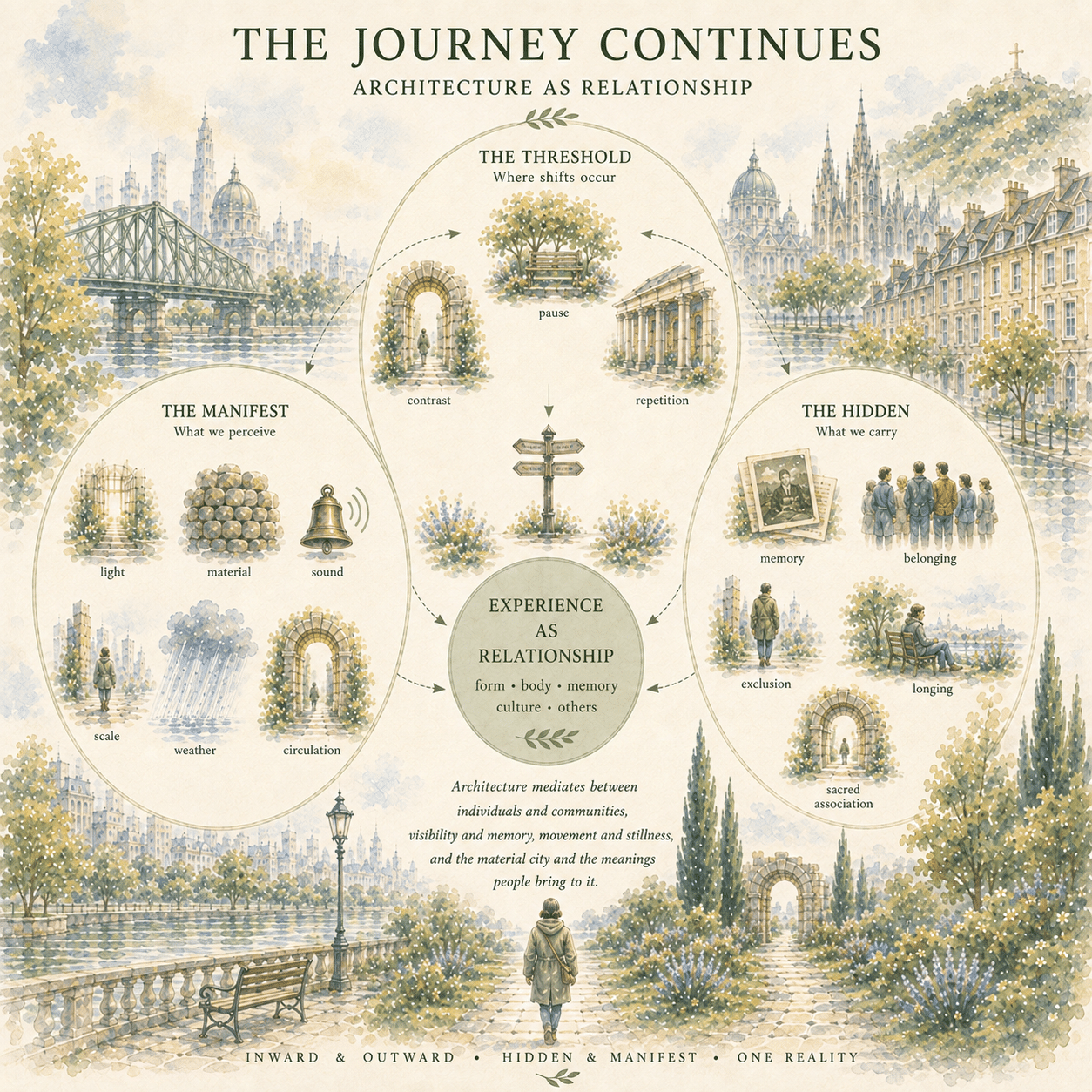
Figure 4: The Journey Continues by Mani Farhadi
Showing architecture as relationship
Workshop Schedule
| Activity | Duration |
| Welcome and introduction | 5 min |
| Provocation/poetry and silence | 5 min |
| Mindfulness walk | 10 min |
| Reflection | 5 min |
| Share-out/discussion (10 mins) | 15 min |
| Conclude/wrap-up | 5 min |
References
Ardalan, Nader, and Laleh Bakhtiar. The Sense of Unity: The Sufi Tradition in Persian Architecture. University of Chicago Press, 1973.
Attar, Farid ud-Din. The Conference of the Birds. Translated by Dick Davis and Afkham Darbandi. London: Penguin Classics, 1984.
Bakhtiar, Laleh. Sufi : Expressions of the Mystic Quest. Thames and Hudson, 1976.
Chittick, William C. The Sufi Path of Love: The Spiritual Teachings of Rumi. Albany: State University of New York Press, 1983.
Pérez-Gómez, Alberto. Built upon Love: Architectural Longing after Ethics and Aesthetics. Cambridge, MA: MIT Press, 2006.
Esmaeili, Nooshin, and Dr. Brian R. Sinclair. Sacrality, Space + Self: Critical Explorations Of Meaning, Relationship + Resonance In Islamic Architecture. Performative Environments: ARCC Conference. Architectural Research Centers Consortium (ARCC). Tucson, Arizona, USA 2021.